All projects
Case study · Digital Cultural Heritage

PALEOTWIN: the Capellini Museum becomes a semantic digital twin

A single semantic repository for the museum’s palaeontological heritage, powering four digital experiences: conversations with AI avatars, interactive 3D prehistoric environments, an inclusive haptic table and augmented-reality showcases.

Museum
Giovanni Capellini Geological Museum, Bologna
Period
2024 – 2025
Programme
PNRR · PE CHANGES, Spoke 4
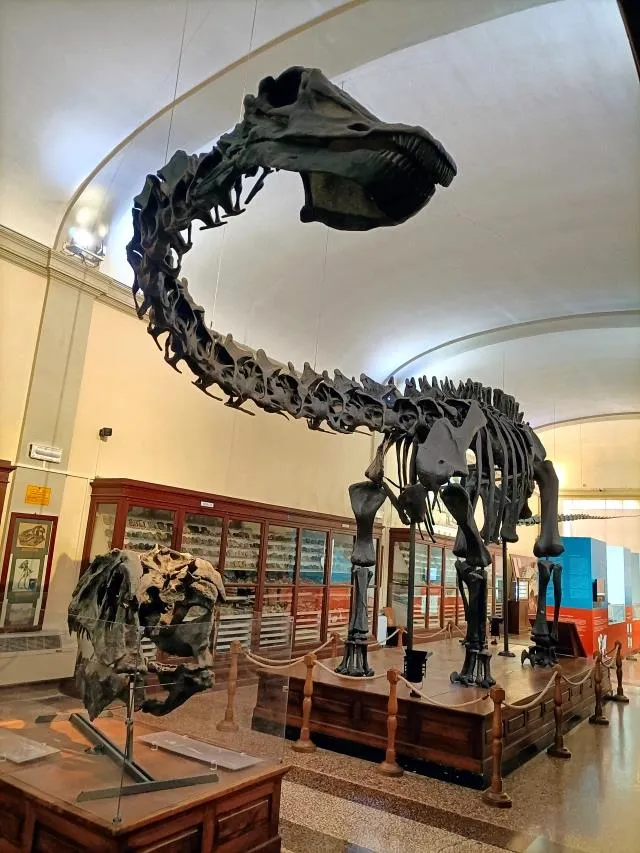
The diplodocus skeleton in the main hall of the Giovanni Capellini Geological Museum in Bologna.

One archive, many experiences

The Capellini Museum, part of the University of Bologna Museum System, holds one of Italy’s most important palaeontological collections. PALEOTWIN was created to open it up in new ways, on site and remotely, including for people with motor, sensory or cognitive disabilities.

At its heart is a semantic repository: every specimen, tangible or intangible, gathers catalogue data, scientific and narrative content, images, audio, video and 3D replicas. Curators use these relationships to build journeys and exhibitions, temporary ones included, without writing code.

The same archive feeds every interface: touch kiosks, multitouch tables, smartphones, augmented and virtual reality. Update a piece of content once and it appears everywhere.


Our role

Energicamente developed the back end

  • Development of the platform back end in Node.js.
  • Design and set-up of the database holding the repository’s content and metadata.
  • Delivery of the back end as the foundation for the interfaces and prototypes built by the partners.

How it works

One well-formed repository, reached by interfaces that differ in form and purpose: content is updated once and reaches every station.

Content
  • SIGEC catalogue via API
  • 3D models, audio, video, images
  • Narrative and inclusive texts
  • Curators’ drag & drop editor
Back endEnergicamente
  • Node.js back end
  • Semantic repository database
Experiences
  • 75–85″ touch stations
  • Conversational avatars
  • Haptic multitouch table
  • Smartphones and AR
  • Web and remote visits

Four prototypes, one repository

Modular industrial prototypes, configured by museum staff and connected to the same content archive.

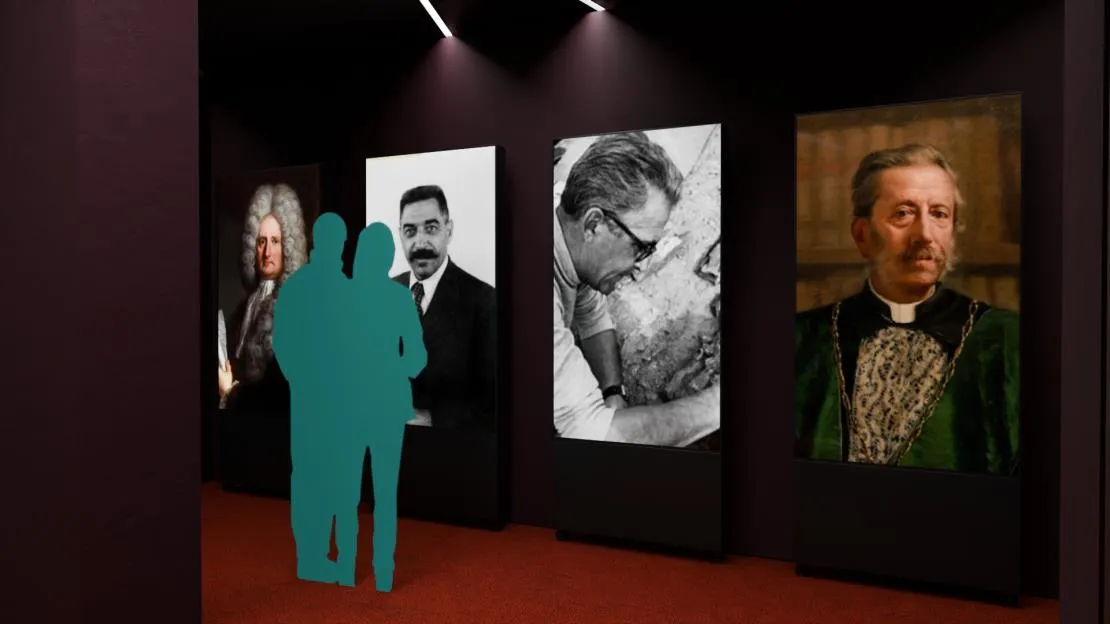
Render of the Sancta Sanctorum room with life-size portraits of the museum’s former directors.
AI avatars · Voice

Sancta Sanctorum

Visitors pick one of the museum’s former directors, tap the microphone and ask about the museum’s history, its rooms and its specimens. Dialogues in Italian and English, with subtitles and questions that can also be typed or picked from a menu.

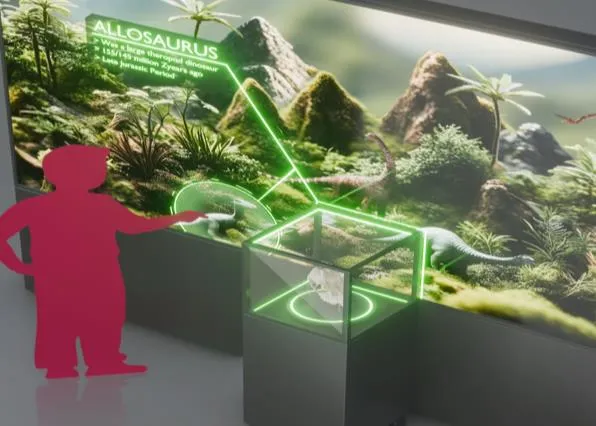
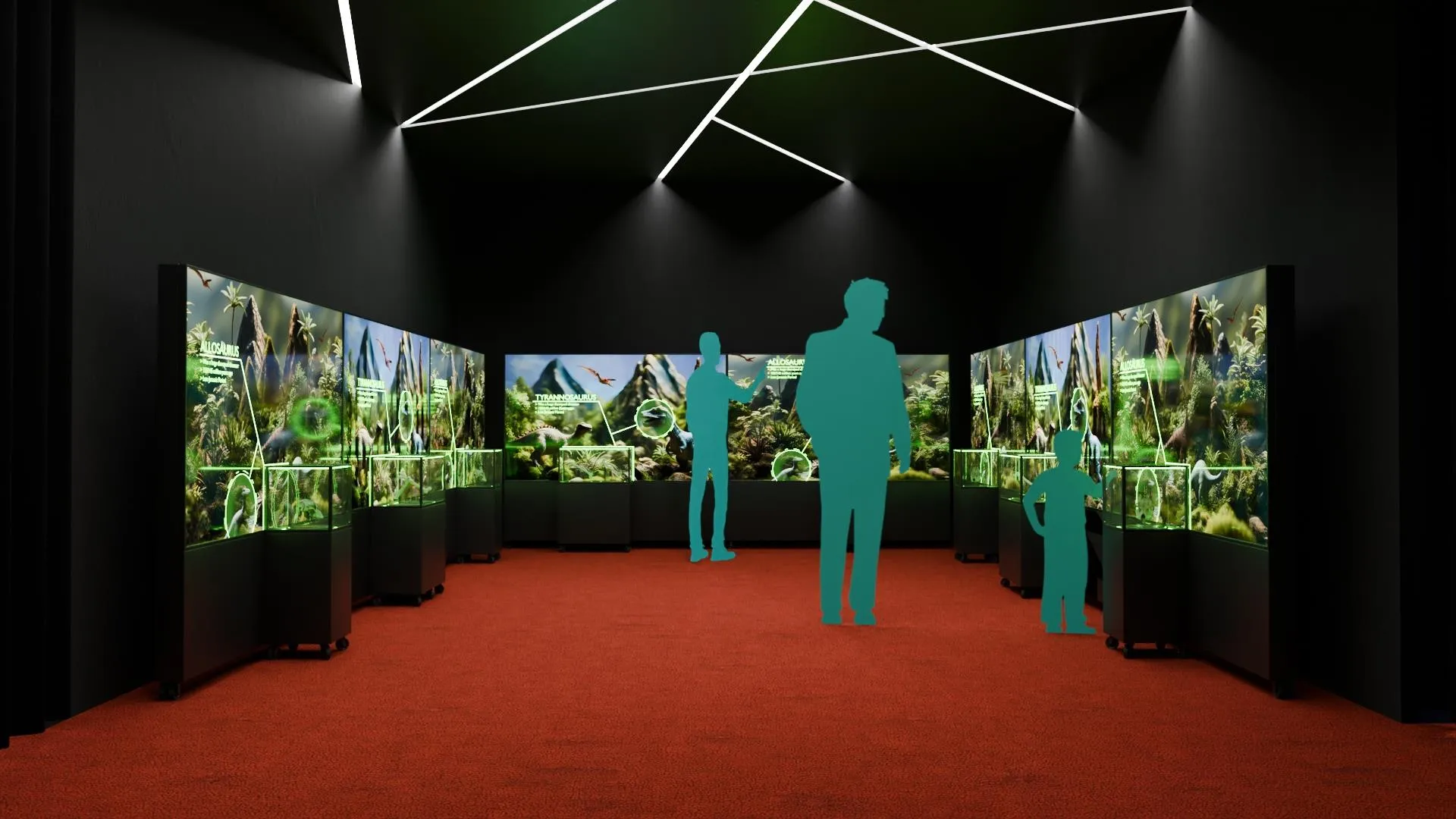
Render of a digital prehistoric environment with a visitor selecting an allosaurus and opening its info card.
Real-time 3D · Touch

Semantic Scenography

Four prehistoric environments, marine, coastal, plain and mountain, populated by moving 3D animals. A tap stops an animal and opens its info cards; a QR code takes it to the visitor’s smartphone in 3D. It can also run as a passive backdrop or map the content of nearby showcases.

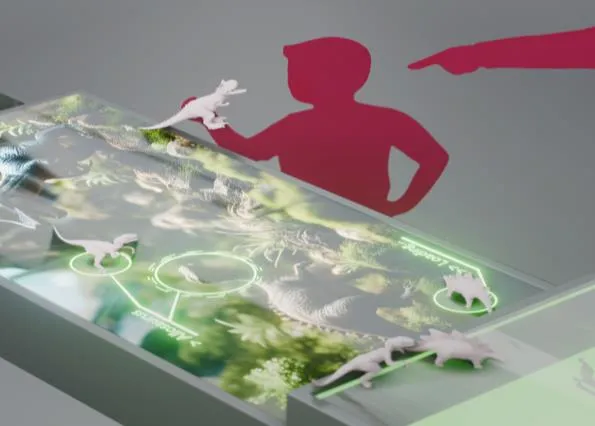
Render of the multitouch table with dinosaur replicas on the screen and glowing paths between habitats.
Phygital · Inclusion

Aptic Inclusive Table

3D-printed, sensor-equipped replicas of prehistoric animals: placed on the multitouch table they launch games and quizzes, such as putting each animal in its habitat. Designed for exploring through touch and sound, and for playing together.

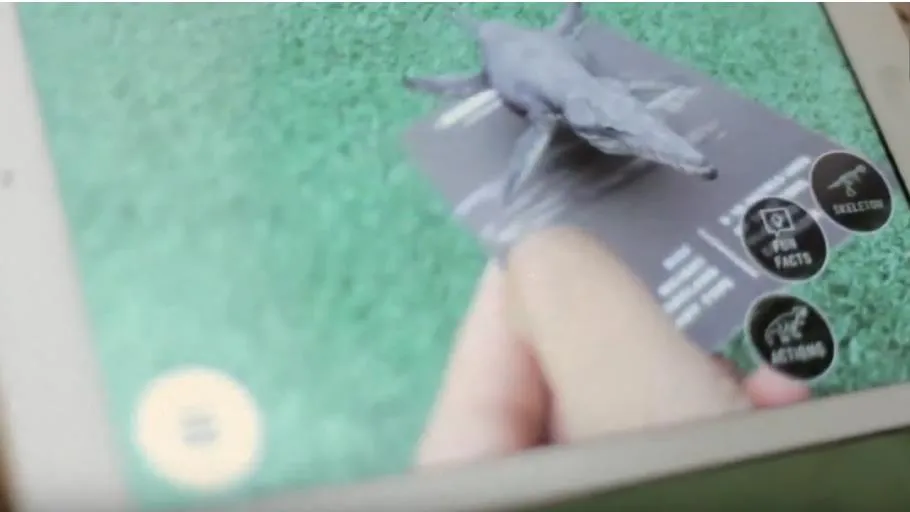
A smartphone framing a marker and showing an augmented-reality 3D replica of a prehistoric marine reptile.
Web AR · QR code

Highlights XR

Augmented reality straight from the smartphone browser, no app needed: framing the marker beside selected showcases brings up animated 3D replicas of the animals, with sound and further details.

The museum spaces

The UX project redesigns the rooms hosting the stations, with interaction areas designed for wheelchair users too.

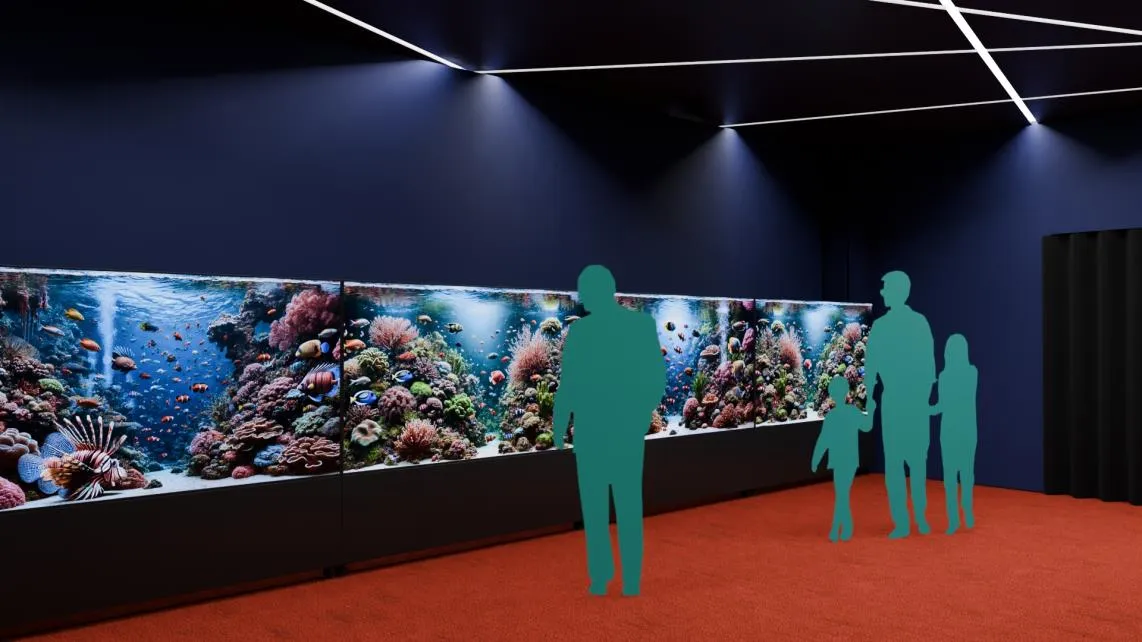
Render of the digital aquarium: a wall of screens showing a prehistoric seabed and a few visitor silhouettes.
Digital aquarium
Render of the immersive room with screens on three walls showing prehistoric landscapes.
Immersive room
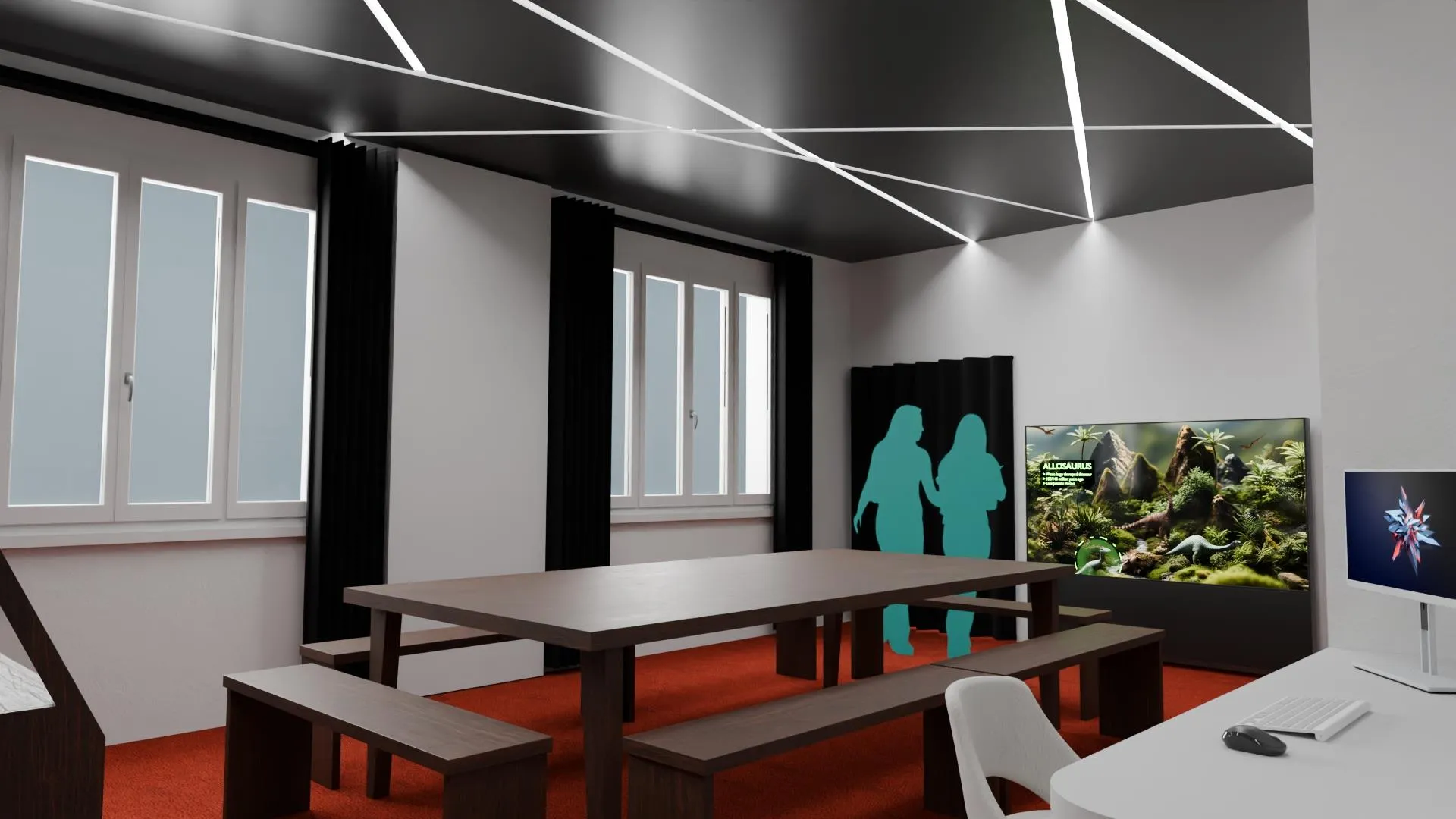
Render of the education room with a large table, a screen showing a prehistoric environment and the control desk.
Education room with control desk

Renders from the UX project by No Real Interactive.

Designed for everyone

Different user profiles and layouts from the same content: standard, game and inclusive.

Motor disabilities

Interaction areas between 70 and 140 cm high, reachable from a wheelchair.

Sensory disabilities

AI-generated subtitles, texts for screen readers, good contrast and legible type.

Cognitive disabilities

Simple, consistent layouts, plain language and a dedicated inclusive text for every object.

Different audiences

Curators, researchers, visitors from abroad and schools, each with their own journey.

Partners and collaborators

A team effort between companies, the museum and public research.

  • Project lead

    Mediasoft S.r.l.

    Project coordination, collaborative virtual environments, artificial intelligence and immersive prototypes.

  • Our role
    Partner · Back end

    Energicamente S.r.l.

    The platform back end in Node.js and the database design.

  • UX design

    No Real Interactive S.r.l.

    Design of the user experience, the stations and the exhibition spaces.

  • Museum

    Giovanni Capellini Geological Museum

    University of Bologna Museum System: the collections and spaces of the project.

  • 3D technology

    CNR-ISPC

    ATON, the open-source engine for 3D reconstructions, virtual and augmented reality on the web.

Logos: Funded by the European Union NextGenerationEU, Italian Ministry of University and Research, Italiadomani, CHANGES.

Project funded by the European Union – NextGenerationEU

PALEOTWIN is funded under Italy’s National Recovery and Resilience Plan (PNRR), Mission 4 Component 2 Investment 1.3, Extended Partnership CHANGES – Cultural Heritage Active Innovation for Sustainable Society, Spoke 4 “Virtual Technologies for Museums and Art Collections”, cascade call.

Programme
PE0000020
PNRR measure
M4C2 · I1.3
CUP
J33C22002850006

Have a project in mind?

Book a free consultation. We reply within 24 hours.

Book a consultation